
HORROR VACUI
Assessment Task #3
Title: Studio Project – Horror Vacui
Due: 2 x A3 Printed Concept Board proposals presented in week 8 class. Print 2 copies of each.
Refine concept proposal & print for consultation in Week 9 class.
Completion of 1 elective research exercise exploring your chosen concept. Week 15 in class Completed greenware progress checkpoint week 12.
Completed Horror Vacui studio work with applied surfaces ( minimum of 2 fired pieces) week 15 A2 Horror Vacui Project Poster (printed) due week 15
Visual Journal with an attached 500 word reflection on your course learning experience
Weighting: 50% Assessment Brief:
Background
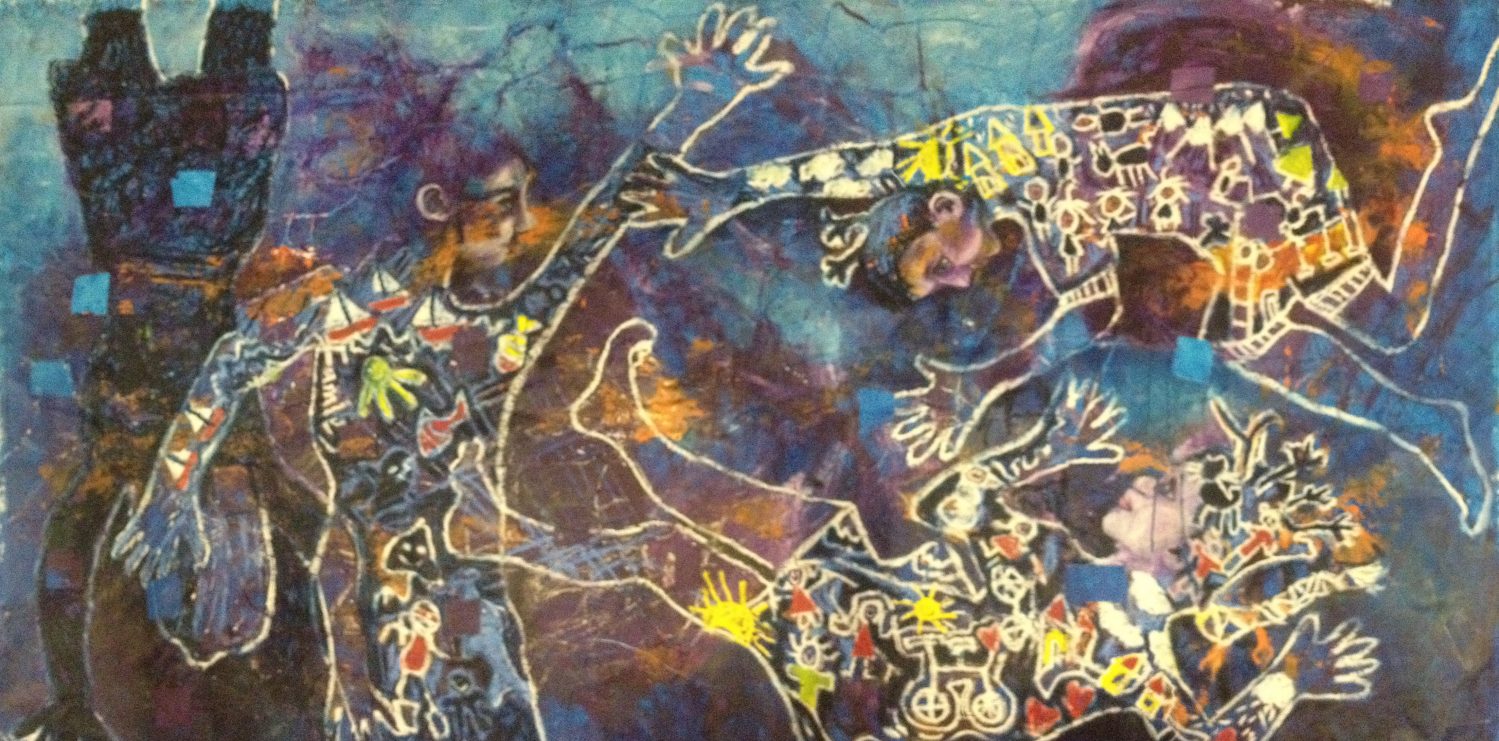
‘Horror Vacui’ is a theory derived from observations that in nature, empty spaces are readily occupied, first proposed by Aristotle in the Fourth book of Physics and adopted in Art and Architecture as the fear of leaving empty space in a composition.
In this project you will explore the ways in which we structure the ‘space in between’, a genesis for adaptive design solutions applied to the built environment. This space may be either an interior or exterior space, and your objects may be minimal or expansive in their modularity.
Beginning with a photographic exploration of selected sites in Sydney, study the spatial, cultural and functional relationships of a particular site to inform the design of modular, stacking three dimensional wall,screen or free standing systems for specific site conditions. Designs will be created in ceramic, but can be considered as prototypes for larger scale serial production in materials such as ceramic, plaster, and concrete. You may choose exterior or interior sites, or a transition between the two.
Further, the built environment is not specifically confined to the structure of buildings or their interior spaces, and solutions may challenge orthodox architectural conventions.The aim is to reach interesting , flexible solutions which can be applied to specific environmental contexts, where system has the structural capacity to vary in scale in proportion. You are encouraged to explore innovations that exploit variable characteristics of the process and scale. For example the potential for hand finished details and variation found in hand formed approaches vs customisable precision of mass manufactured products, or innovative combinations of the two.
Examples of outcomes could include interior screens for ventilation, privacy, acoustic cladding or barriers,, support plant growth, such as vertical gardens, climber walls, water storage units, exterior building cladding and other functions.
In addition to utilitarian considerations, your concept should address the notion of ‘Horror Vacui ‘ associated with the site. Consider too how you can also incorporate important aspects of the site: for example it’s history, a cultural event, a social or environmental concern.
PROCESS
Once you have decided on a site for intervention and a response to ‘Horror Vacui ‘ , use drawings to explore the design of adaptive objects to engage the architectural space. Progressively explore iterations of objects, using 2d drawings, 3d computer models and 3d clay marqueties, varying the shapes and structures that can be composed from them. Refine one or two of these, and use repeat pattern drawings to investigate their suitability for modular construction, whether produced in multiples or in a pair. Consider how variation might be achieved by altering a basic cast unit. Once you have decided on a form, prepare a scale dimensional model from which you will make a plaster mould. Create a body of slip cast ceramic work from the mould and refine to a standard suitable for presentation.
You will initially develop 2 concepts for a three dimensional modular ceramic forms that respond to the project title, visualising how they connect with each other and /or the immediate built environment, considering the principles of pattern, orientation, growth and transformation. Solutions should be site specific. They can be freestanding or connected to a larger structure or system (such as architecture), and you may consider structures from ‘nano’ to ‘mega’ scale. The modules and their assemblage must be conceived and visualised at a 1:1 size in their intended location, however they may be scaled down for studio fabrication.
The A3 concept boards due in week 8 should include for each proposal: a short conceptual description, sketches, short notes on significant research, no more than 2 precedent images and a timeline diagram showing key process milestones and dates for concept realisation. See the weekly outline for details.
During week 8 class you will critique other class members concepts and receive critique of your own work from another student’s and your tutor.(bring 2 printed copies of each poster for this) Following feedback and reflection you will select one of the ideas to develop as your project.
POSTER
The prototype for this module may be drawn in 3d computer modelling software or by hand. You will create a working mould from the prototype and cast ceramic modular forms using liquid casting slip. Acer completing the cast modules ( which may be augmented ceramic or other material components) you will prepare an inspiring A2 poster to contextually situate your assemblage at the appropriate scale, using photomontage and /or computer graphic imaging techniques. The poster will be presented with your finished ceramic work for week 15 assessment.
As part of your studio research towards the realisation of your chosen concept, you will need to complete a short elective exercise from the list at the end of this assessment Task. This activity is due in week 11 class.
STUDIO RESEARCH:
Select one of the exercises below and completed for assessment in week 11.
1. Cut slipcast clay sheets into linear elements and assemble these into a 3d dimensional lattice form reminiscent of ‘networked space’. Create the sheets by pouring slip onto a plaster mould
2. Modify a ‘found’ ceramic object by dissecting, reassembling, fragmenting and adding to it another fired clay component, responding to the ideas of ‘parasite’.
3. On a single 150 x 150 mm cast greenware tile hand paint an 8 step tonal intensity gradient for 2 different colours, using liquid ceramic underglaze stains diluted with water . On a second tile, compose and paint a ‘chiaroscuro‘ scene of the college environs using only four of those tones.
4. Create 2 sand cast forms which develop a dialogue between natural and man made structures.
5. Create 2 open forms from supplied moulds that explore different slip casting techniques such as layering, marbling, deformation or mechanical corrosion.
6. Create a small digital model in Mudbox, 123D Sculpt, Sculptris, or similar software and convert the model to an stl file. Either 3d print the object in plastic and use it as a stamp to texture a hand formed clay object, or make a small ( 50 x 50mm) clay interpretation of it using a 3d clay printer. Fire the finished result.
7. Make 6 x A4 drawing explorations of an area of the city focussing on space, structure and textural detail, then translate the ideas into 2 cast vessels using an existing mould.
8. Modify a found ceramic object by painting or applying graphic decal imagery over existing pattern in a manner which reflects a narrative of transformation in imagery and form.
9. Experiment with the material structures of ‘burn out’ casts by dipping 3 different absorbent materials into clay casting slip, then firing the dried forms. Select the most successful result and create another ‘burn out’ cast that poetically responds to its transformation.
10. Create a 30 second video which expresses the poetic interpretation of one aspect of the ceramic process you have studied, and develop a visual element from the video to generate surface pattern or motif as a graphic tile treatment.
 Red Beetle Design