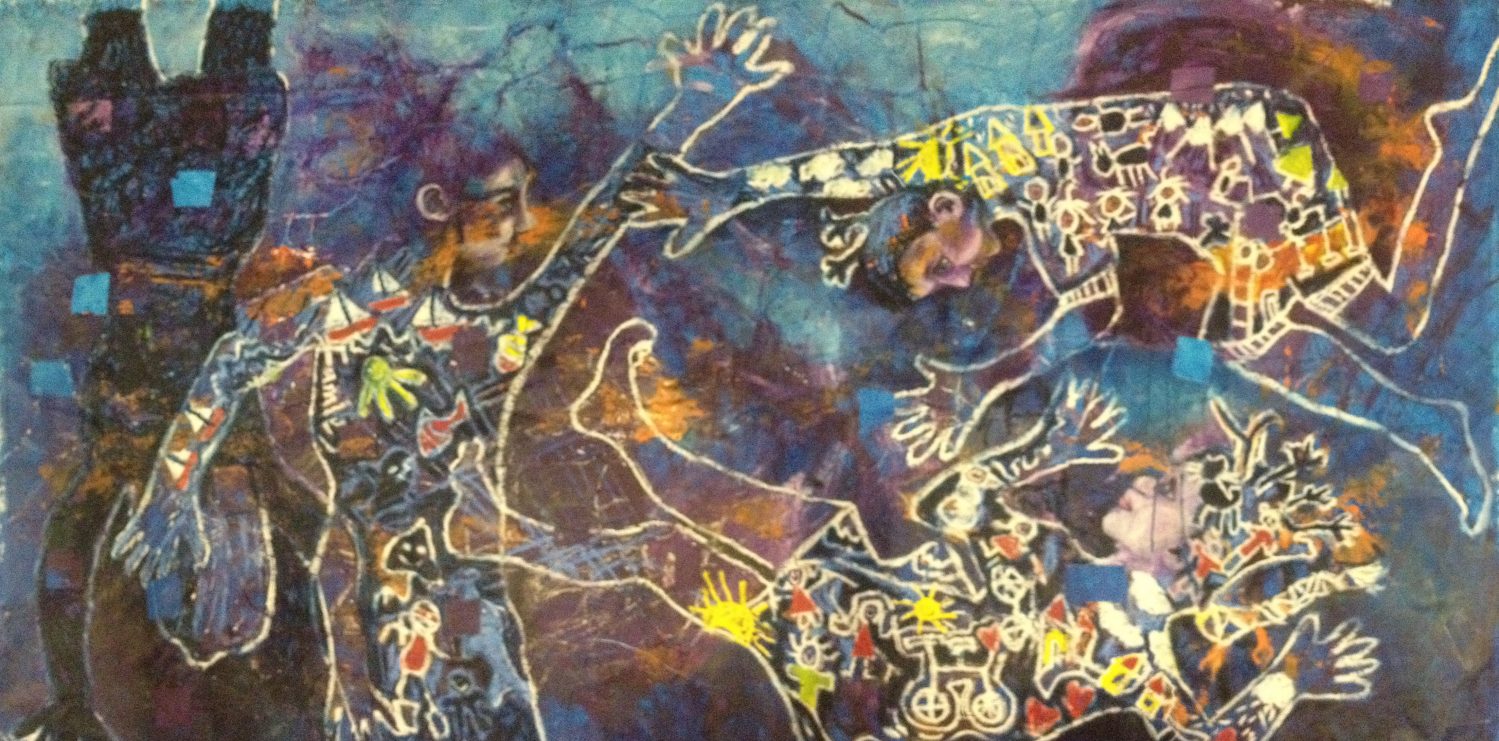
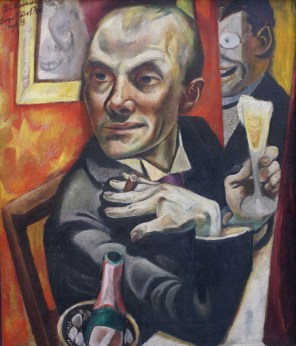
MAX Beckmann (1884 – 1950)
‘Self-Portrait with Champagne’ (1919)
Oil on Canvas.
Assessment Task 1
Title: Atemporal Painting
Due: Week 6
Weighting: 35%
Assessment Brief:
“In visual art, atemporality manifests itself as a kind of art-making that is inspired by, refers to, or avails itself of styles, subjects, motifs, materials, strategies, and ideas from an array of periods on the art historical timeline. […] Unlike past periods of revivalism, such as the appropriationist eighties, this super-charged art historicism is neither critical nor ironic; it’s not even nostalgic. It is closest to a connoisseurship of boundless information, a picking and choosing of elements of the past to resolve a problem or a task at hand.” (Hoptman, 2014, 14)
For the ‘Atemporal Painting’ assessment task, you are required to visit the Art Gallery of New South Wales (AGNSW) and independently investigate one of the paintings on display in the general collection. The chosen painting may be from any culture or era. It is important that you spend time in front of the chosen painting in order to carefully examine it and develop an intimate understanding of its various attributes: qualities such as sheen, texture, scale, support, etc. are to be taken into consideration, leading to an understanding of the artist’s process. It is a good idea to photograph the work, including close-up details, and pay careful attention to the information on the wall label. You are to research as much relevant information as possible about the artwork, the artist, and the context in which it was created.
Your research is to lead to your own practice-based interpretation of the painting that demonstrates an insightful and imaginative response to the chosen work. How might revisiting the creation of another artist’s work through re-enactment, reconstruction or reinterpretation lead to a fresh perspective or creative re-imagining?
Your finished work should lead from your research, but may result in speculative, experimental, and unconventional outcomes. Your work is to be accompanied by a research file that presents a detailed account of the background research, planning and preparation for Assessment Task 2.
Atemporal Painting-A definition
” The atemporal song, story, or painting contains elements of history but isn’t historical; it is innovative but not novel, pertinent rather than prescient. In visual art, atemporality manifests itself as a kind of art-making that is inspired by, refers to, or avails itself of styles, subjects, motifs, materials, strategies, and ideas from an array of periods on the art-historical timeline. Artists have always looked to art history for inspiration, but the immediate and hugely expanded catalogue of visual information offered by the Internet has radically altered visual artists’ relationship to the history of art and caused, as the painter Matt Connors puts it, a “redirection of artistic inquiry from strictly forward moving into a kind of super-branched-out questioning.” Unlike past periods of revivalism, such as the appropriationist eighties, this super-charged art historicism is neither critical nor ironic; it’s not even nostalgic. It is closest to a connoisseurship of boundless information, a picking and choosing of elements of the past to resolve a problem or a task at hand.” (Moma,2014)
Recommended Reading:
Laura Hoptman, The Forever Now: Contemporary Painting in an Atemporal World, exhibition catalogue, MOMA, New York, 2014. http://www.moma.org/momaorg/shared/pdfs/docs/publication_pdf/3208/MoMA_ForeverNow_PREVIEW.pdf?1414419175
 Red Beetle Design