Max BECKMANN (1884-1950)
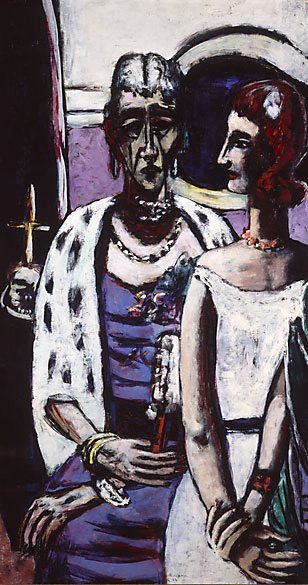
Mother and Daughter-1949
Oil on canvas. AGNSW
For the ‘Atemporal Painting’ assessment task, you are required to visit the Art Gallery of New South Wales (AGNSW) and independently investigate one of the paintings on display in the general collection.
ASSESSMENT TASK:
You are expected to have visited the Art Gallery of NSW in your own time during the week leading up to Week 2’s gallery visit as a class. Prior to class in Week 2, you will need to select a painting currently on display and commence your research in order to give a presentation on the work (3-minute maximum) during the class at the gallery in Week 2.
Discuss the painting techniques you have observed in the work and discuss the context in which it was created:
- name of the work,the date and artist’s name
- the artist’s intentions/motivations
- her/his concurrent work,
- any other biographical/ historical context you think is relevant.
While you are encouraged to consider a wide scope of possibilities in the AGNSW collection, you should be aware of ethical issues and cultural sensitivities, e.g. what are the ethical considerations in adopting aspects of an indigenous artist’s work if you yourself are not connected with the culture?
NOTES:
The chosen painting may be from any culture or era. It is important that you spend time in front of the chosen painting in order to carefully examine it and develop an intimate understanding of its various attributes: qualities such as sheen, texture, scale, support, etc. are to be taken into consideration, leading to an understanding of the artist’s process. It is a good idea to photograph the work, including close-up details, and pay careful attention to the information on the wall label. You are to research as much relevant information as possible about the artwork, the artist, and the context in which it was created. Your research is to lead to your own practice-based interpretation of the painting that demonstrates an insightful and imaginative response to the chosen work.
• Prepared notes to give your brief presentation (3-minute maximum);
• Camera for photo-documentation of your chosen work (no flash);
Max BECKMANN (1884-1950)
Mother and Daughter-1949
BACKGROUND
Although associated with German expressionism and the New Objectivity movement, Max Beckmann occupies his own category as a moral fabulist. His proclivity was for symbolic narratives, often large in scale and complex in iconography, that highlight the tragicomic fate of humanity. The triptych, with its sacred associations, was the format he favoured for important projects, producing a significant number of them at the time of his forced flight from Nazism in 1937. Beckmann’s portraits, still-life subjects, nudes and smaller genre pieces are equally invested with a sense of the sacramental.Ever the sceptical recorder of the follies of the world, even his most affectionate works have a cynical edge.
 Red Beetle Design